Combatting Extreme Drought Stress on top of Seasonal Stressors
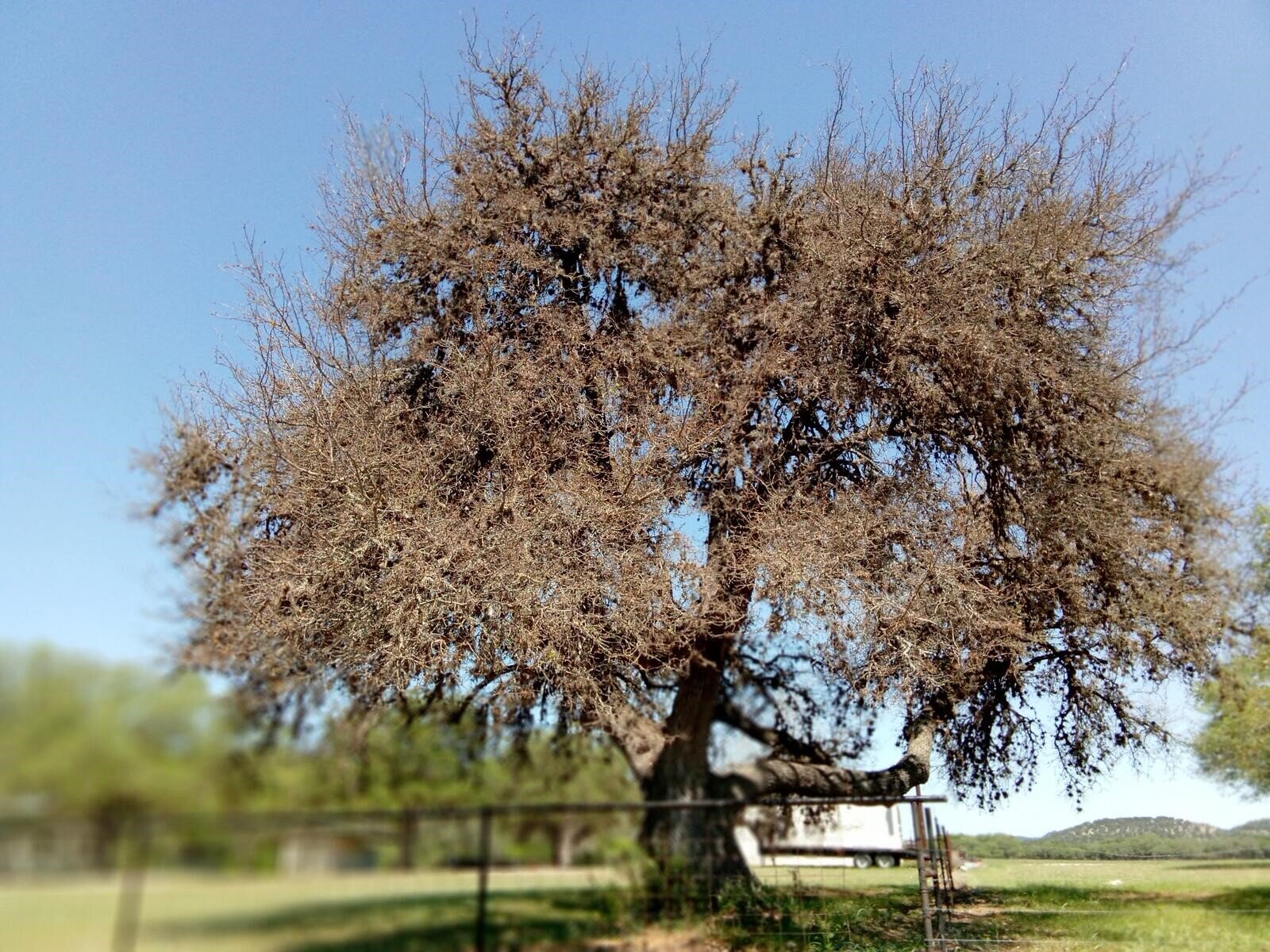
The tree in the picture is producing hardly any buds and is highly infested by ball moss, along with an unhealthy growth pattern characterized by a dominant spot and branch overpopulation.
Spring Growth Update: Freeze Stress in Hill Country Oaks
Following the February 2021 freeze, many oak trees in the Texas Hill Country are now showing signs of stress during spring growth. Common symptoms include reduced bud production, unhealthy canopy development, branch overpopulation, and increased infestations of ball moss. These issues are especially noticeable in trees already impacted by drought and other environmental stressors.
Ball moss appears to be more prevalent on weakened trees, and ongoing drought conditions are further limiting the trees’ ability to recover. Many oaks are now operating under multiple overlapping stress factors, resulting in reduced vigor and uneven canopy growth.
Root Zone Support for Stressed Trees
One approach used to support recovery is root zone inoculation, which introduces beneficial mycorrhizal fungi into the soil. These fungi form a symbiotic relationship with tree roots, improving water and nutrient absorption, especially in drought conditions. In return, the tree supplies carbohydrates that support fungal growth, enhancing overall soil health and root efficiency.
This service is intended to help relieve drought stress by improving the tree’s ability to access and utilize available moisture and nutrients. A 100-gallon root inoculation covers a soil zone of roughly 20–40 trees, depending on size and density.
Current Conditions
While some oaks are showing resilience, many trees across the region are under significant stress due to the combined effects of freeze damage, drought, and other environmental pressures. These conditions are contributing to widespread canopy decline and reduced growth.
Support the roots. Strengthen the canopy. Help trees recover from stress.
Tribemania Tree Services include: